.gif)

Download Mobile App 






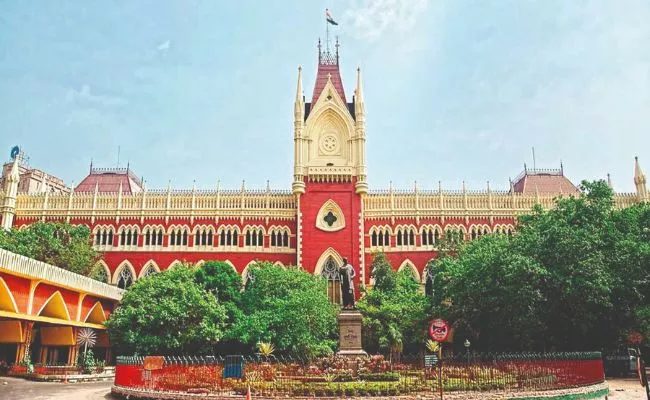
The ongoing political and legal crisis surrounding the Trinamool Congress (TMC) in West Bengal took a critical turn after the Calcutta High Court declined to hear a fresh petition filed by the party against investigative actions by the State Criminal Investigation Department (CID). The ruling party had rushed to the high court seeking urgent intervention after a specialized CID team conducted an extensive raid at the central TMC party office located adjacent to party chief Mamata Banerjee’s Kalighat residence. The search was launched to recover primary resolution documents related to a massive institutional signature forgery scandal that has deeply fractured the party’s state legislative unit.
The emergency petition was originally listed for a detailed hearing before the single-judge bench of Justice Saugata Bhattacharya. However, the court systematically refused to proceed with the arguments, with the presiding judge choosing to recuse himself entirely from the matter. Explaining his decision, Justice Bhattacharya highlighted a fundamental jurisdictional overlap, noting that TMC National General Secretary Abhishek Banerjee had already approached a separate high court bench under Justice Kaushik Chanda concerning the exact same signature forgery investigation, where he successfully secured temporary protection from coercive legal actions.
Justice Bhattacharya observed that keeping identical matters active across two separate judicial benches concurrently could lead to conflicting judicial orders and severe procedural chaos. He ruled that because the foundational elements of the forgery case were already being adjudicated by Justice Chanda's bench, no other parallel bench should issue independent rulings on the signature dispute. Consequently, the case file has been formally reassigned and transferred back to the administrative bench of the Chief Justice of the Calcutta High Court, who will officially decide which specific bench will absorb the consolidated petitions.







 West Bengal
 Bihar
Bihar Uttar Pradesh
 Jharkhand